Convex heptagon angles increasing by 1 degree find second smallest angle
Table of Contents
- Understanding the Problem: Defining a Convex Heptagon and Its Properties
- Geometric Definition and Structural Characteristics of a Convex Heptagon
- Sum of Interior Angles in Convex Polygons: The Formula and Its Application
- Labeling Angles in a Convex Heptagon and Their Sequential Relationships
- Convex vs. Concave Polygons: Key Differences in Angle Properties
- Mathematical Significance and Real-World Applications of Convex Polygons
- Arithmetic Progression in Convex Heptagon Angles: Mathematical Framework and Equation Formation
- Arithmetic Progression Definition and Application to Heptagon Angles
- Structured Representation of Heptagon Angles Using Arithmetic Progression
- Expressing All Angles in Terms of the Smallest Angle ( x )
- Geometric Constraints and Sum of Interior Angles
- Formulating the Sum of Angles Using Arithmetic Progression
- Solving the Equation: Calculations and Validation in Convex Heptagon Angle Progression
- Breaking Down the Arithmetic Series and Formulating the Equation
- Algebraic Solution and Verification of the Base Angle x
- Tabular Representation of Angle Measures and Potential Missteps
- Significance of Precision in Geometric Calculations
- Comparison with Similar Problems in Other Polygons
Geometry challenges often reveal elegant solutions hidden within structured problems. Consider a convex heptagon where each interior angle increases by exactly 1 degree from its predecessor. This seemingly simple progression conceals a mathematical puzzle: what is the precise measure of the second smallest angle when all constraints of convexity are applied? The answer lies at the intersection of polygon theory and arithmetic sequences, where precision dictates whether angles remain valid or collapse under geometric rules.
Convex heptagons, with their seven straight sides and symmetrical properties, serve as a critical case study in polygon analysis. Unlike triangles or quadrilaterals, their interior angles must collectively sum to 900 degrees—a fixed value derived from fundamental geometric formulas. When angles follow an arithmetic progression, the problem transforms into solving for an unknown variable while ensuring no angle exceeds 180 degrees. This balance between algebraic manipulation and geometric validation forms the core of the solution, bridging abstract theory with practical application.
Understanding the Problem: Defining a Convex Heptagon and Its Properties
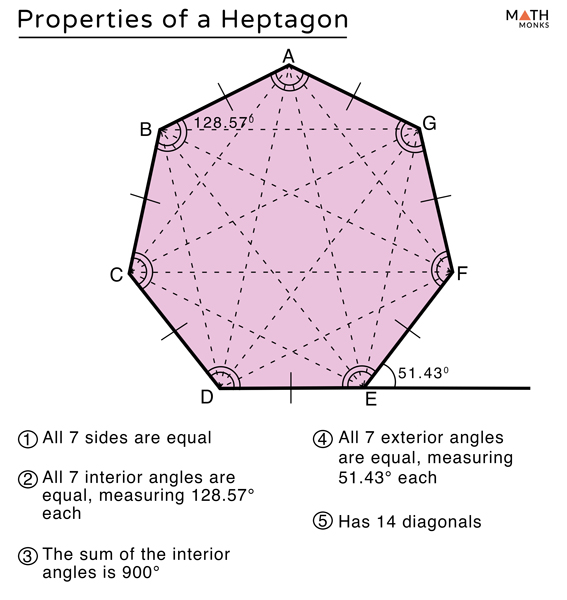
A convex heptagon represents a seven-sided polygon where all interior angles measure less than 180°, and no sides bend inward, ensuring no indentations. Unlike concave polygons, which feature at least one angle exceeding 180°, convex polygons maintain structural integrity, making them fundamental in both theoretical geometry and practical applications. This section explores the geometric foundation of convex heptagons, comparing them to other polygons while emphasizing their unique properties, particularly in relation to interior angles. The discussion also integrates the mathematical formula for calculating the sum of interior angles, a critical tool for solving problems involving heptagons and other polygons.
Geometric Definition and Structural Characteristics of a Convex Heptagon
 A convex heptagon is a closed two-dimensional shape with seven straight sides and seven vertices, where each interior angle is strictly less than 180°. In contrast, polygons like pentagons (five sides) or octagons (eight sides) follow similar structural rules but differ in the number of sides and angles. The convexity ensures that any line segment joining two points within the heptagon lies entirely inside it, a property absent in concave polygons. This distinction becomes crucial when analyzing angle sums or solving geometric puzzles, such as the problem involving seven consecutive angles increasing by 1° each.
The sides of a convex heptagon are labeled sequentially (e.g., A₁B₁, B₁C₁, ..., G₁A₁), and the interior angles are denoted as ∠A₁, ∠B₁, ..., ∠G₁. Each angle is formed by the intersection of two adjacent sides, and their measures must satisfy the convexity condition. For example, if one angle were 190°, the heptagon would be concave, violating the problem’s constraints. Below is a simplified ASCII representation of a convex heptagon with labeled angles:
```
A₁
/ \
/ \
G₇/ \B₂
\ /
\ /
F₆
```
(Note: This is a highly abstracted sketch; actual heptagons are drawn with equal side lengths or proportional scaling for clarity.)
A convex heptagon is a closed two-dimensional shape with seven straight sides and seven vertices, where each interior angle is strictly less than 180°. In contrast, polygons like pentagons (five sides) or octagons (eight sides) follow similar structural rules but differ in the number of sides and angles. The convexity ensures that any line segment joining two points within the heptagon lies entirely inside it, a property absent in concave polygons. This distinction becomes crucial when analyzing angle sums or solving geometric puzzles, such as the problem involving seven consecutive angles increasing by 1° each.
The sides of a convex heptagon are labeled sequentially (e.g., A₁B₁, B₁C₁, ..., G₁A₁), and the interior angles are denoted as ∠A₁, ∠B₁, ..., ∠G₁. Each angle is formed by the intersection of two adjacent sides, and their measures must satisfy the convexity condition. For example, if one angle were 190°, the heptagon would be concave, violating the problem’s constraints. Below is a simplified ASCII representation of a convex heptagon with labeled angles:
```
A₁
/ \
/ \
G₇/ \B₂
\ /
\ /
F₆
```
(Note: This is a highly abstracted sketch; actual heptagons are drawn with equal side lengths or proportional scaling for clarity.)
Sum of Interior Angles in Convex Polygons: The Formula and Its Application
The sum of interior angles in any convex polygon is determined by the formula:
Sum of interior angles = (n – 2) × 180° where n represents the number of sides (or vertices).
 For a heptagon (n = 7), the sum is calculated as:
(7 – 2) × 180° = 5 × 180° = 900°.
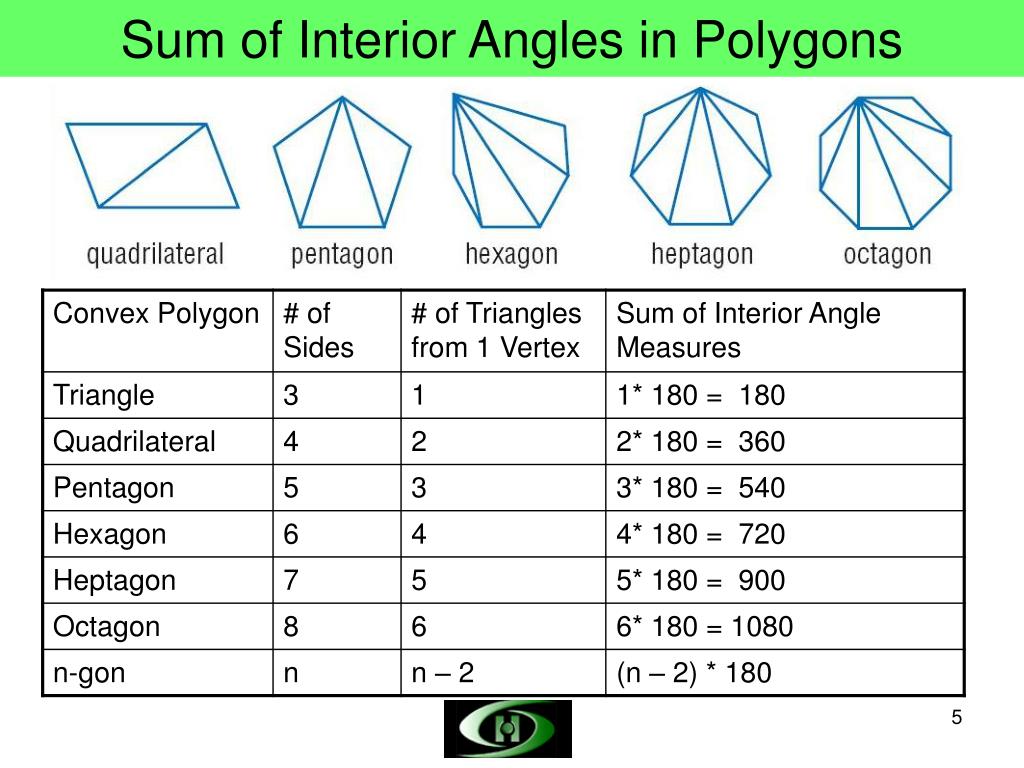
This means all seven interior angles combined must equal 900°. The formula derives from dividing the polygon into (n – 2) triangles, each contributing 180° to the total sum. Understanding this principle is essential for solving problems where angles follow a specific pattern, such as increasing by 1° sequentially.
Comparison of Sum of Interior Angles Across Polygons
The following table illustrates how the sum of interior angles varies with the number of sides in different polygons:
For a heptagon (n = 7), the sum is calculated as:
(7 – 2) × 180° = 5 × 180° = 900°.
This means all seven interior angles combined must equal 900°. The formula derives from dividing the polygon into (n – 2) triangles, each contributing 180° to the total sum. Understanding this principle is essential for solving problems where angles follow a specific pattern, such as increasing by 1° sequentially.
Comparison of Sum of Interior Angles Across Polygons
The following table illustrates how the sum of interior angles varies with the number of sides in different polygons:
| Polygon Type | Number of Sides (n) | Sum of Interior Angles |
|---|---|---|
| Triangle | 3 | (3 – 2) × 180° = 180° |
| Quadrilateral | 4 | (4 – 2) × 180° = 360° |
| Pentagon | 5 | (5 – 2) × 180° = 540° |
| Hexagon | 6 | (6 – 2) × 180° = 720° |
| Heptagon | 7 | (7 – 2) × 180° = 900° |
| Octagon | 8 | (8 – 2) × 180° = 1080° |
This table underscores how the sum increases linearly with the number of sides, a pattern critical for solving geometric problems involving convex polygons.
Labeling Angles in a Convex Heptagon and Their Sequential Relationships
In a convex heptagon, angles are typically labeled in a clockwise or counterclockwise sequence (e.g., ∠A₁, ∠A₂, ..., ∠A₇). If the angles follow a specific arithmetic progression—such as each angle being 1° larger than the previous one—they can be expressed as:
∠A₁ = x ∠A₂ = x + 1° ∠A₃ = x + 2° ... ∠A₇ = x + 6°
Here, x represents the measure of the smallest angle (∠A₁). The sum of all angles is then: x + (x + 1°) + (x + 2°) + ... + (x + 6°) = 7x + 21° = 900°. Solving for x yields the smallest angle, while the second smallest angle (∠A₂) is x + 1°. This sequential relationship is central to the problem’s solution.
Convex vs. Concave Polygons: Key Differences in Angle Properties
Convex and concave polygons exhibit fundamental differences in their angle properties, primarily due to their structural definitions. In a convex polygon, all interior angles are less than 180°, and the polygon bulges outward. This ensures that any line segment between two points within the polygon remains inside it. In contrast, a concave polygon has at least one interior angle greater than 180°, creating an indentation. Such indentations cause the polygon to "cave inward," altering angle sum calculations and geometric behavior. For example, in a concave heptagon, one angle might measure 200°, while the remaining six angles adjust to compensate, potentially making the sum exceed 900°. This variability complicates problems involving angle sequences, as the convexity constraint simplifies calculations by ensuring all angles are acute or obtuse but never reflex (>180°). The problem’s focus on a convex heptagon eliminates such complexities, allowing for straightforward application of the interior angle sum formula.
Mathematical Significance and Real-World Applications of Convex Polygons
Convex polygons play a pivotal role in geometry, architecture, and natural structures due to their stability and predictable properties. In geometry, convex polygons serve as building blocks for more complex shapes, such as tiling patterns or tessellations. For instance, regular convex hexagons form honeycomb structures, optimizing space and material use—a principle observed in beehives and modern architectural designs like the Alhambra in Spain. In architecture, convex polygons are preferred for their structural integrity. Buildings with convex roofs or floors distribute weight evenly, reducing stress on supporting beams. The Pentagon in Washington, D.C., exemplifies this with its five-sided convex design, ensuring stability and symmetry. Similarly, floor tiling often employs convex shapes like squares or regular hexagons to minimize gaps and maximize coverage, a concept rooted in the sum of interior angles ensuring seamless fits. Even in computer graphics, convex polygons are favored for rendering efficiency. Their predictable angle sums allow algorithms to calculate lighting and shadows more accurately than concave counterparts, which may require complex subdivisions. The mathematical consistency of convex polygons—such as their fixed angle sums—makes them indispensable in both theoretical and applied fields.
Arithmetic Progression in Convex Heptagon Angles: Mathematical Framework and Equation Formation
Understanding the relationship between the angles of a convex heptagon and their progression as an arithmetic sequence is pivotal in solving for the measure of each angle. Given that each subsequent angle increases by a consistent difference of 1°, this scenario perfectly aligns with the principles of arithmetic progression (AP). AP is a fundamental concept in mathematics where a sequence of numbers follows a pattern where the difference between consecutive terms remains constant. In this context, the angles of the heptagon form such a sequence, allowing us to leverage AP formulas to derive precise measurements while adhering to geometric constraints. The structured approach to modeling the angles as an AP not only simplifies the problem but also ensures that all derived solutions comply with the geometric properties of a convex heptagon. By defining each angle in terms of the smallest angle (x), we can systematically express the sum of all interior angles and solve for x while verifying the convexity condition—where each angle must be less than 180°.
Arithmetic Progression Definition and Application to Heptagon Angles
An arithmetic progression (AP) is a sequence of numbers where the difference between consecutive terms, known as the common difference (d), remains constant. The general formula for the nth term of an AP is represented as: Aₙ = a₁ + (n-1)d where:
In the context of the convex heptagon, the common difference (d) is 1°, as each subsequent angle is 1° larger than the previous one. This means the angles can be expressed as a sequence where:
This progression ensures that the angles increase systematically while maintaining the geometric integrity of the heptagon.
Structured Representation of Heptagon Angles Using Arithmetic Progression
To visualize the progression of the angles, a table can be constructed to list each angle in terms of its position (n), its measure (Aₙ), and its relationship to the preceding angle. Below is the table representing all seven angles of the heptagon, where A₁ = x and the common difference (d) is 1°:
| Angle Term (Aₙ) | Position in Heptagon (n) | Measure in Degrees (Aₙ) | Relationship to Previous Angle |
|---|---|---|---|
| A₁ | 1 | x | Smallest angle; no preceding angle |
| A₂ | 2 | x + 1° | A₁ + 1° |
| A₃ | 3 | x + 2° | A₂ + 1° |
| A₄ | 4 | x + 3° | A₃ + 1° |
| A₅ | 5 | x + 4° | A₄ + 1° |
| A₆ | 6 | x + 5° | A₅ + 1° |
| A₇ | 7 | x + 6° | A₆ + 1° |
This table clearly illustrates how each angle is derived from the smallest angle (x) by adding an incrementally increasing value of the common difference (1°). Such a structured representation facilitates the transition to algebraic manipulation, where the sum of all angles can be expressed in terms of x.
Expressing All Angles in Terms of the Smallest Angle (x)
Using the general formula for the nth term of an AP, each of the seven angles of the heptagon can be explicitly written as follows:
The smallest angle, serving as the baseline for the progression.
The second angle increases by 1° from the first angle.
The third angle increases by 2° from the first angle, or 1° from the second angle.
The fourth angle follows the same pattern, increasing by 3° from the first angle.
The fifth angle is 4° larger than the smallest angle.
The sixth angle continues the progression, now 5° larger than the smallest angle.
The largest angle in this sequence, 6° larger than the smallest angle. This systematic expression allows for the sum of all interior angles to be formulated algebraically, providing a pathway to solving for x.
Geometric Constraints and Sum of Interior Angles
Before proceeding with algebraic manipulation, it is essential to acknowledge the geometric constraints governing the angles of a convex heptagon. These constraints are critical to ensuring the validity of any derived solution:
In a convex heptagon, all interior angles must be less than 180° and greater than 0°. The sum of all interior angles of a heptagon is fixed at 900°, derived from the formula for the sum of interior angles of an n-sided polygon: (n-2) × 180°. For a heptagon (n = 7), this yields (7-2) × 180° = 5 × 180° = 900°.
These constraints serve as boundary conditions for the solution, ensuring that all calculated angles are both geometrically feasible and mathematically consistent.
Formulating the Sum of Angles Using Arithmetic Progression
To find the measure of the smallest angle (x), we start by expressing the sum of all seven angles in terms of x. Using the AP expressions derived earlier, the sum (S) of the angles is: S = A₁ + A₂ + A₃ + A₄ + A₅ + A₆ + A₇ S = x + (x + 1°) + (x + 2°) + (x + 3°) + (x + 4°) + (x + 5°) + (x + 6°) This can be simplified by combining like terms: S = 7x + (0° + 1° + 2° + 3° + 4° + 5° + 6°) The expression inside the parentheses represents the sum of the first six non-negative integers (starting from 0°), which forms an arithmetic series. The sum of this series can be calculated using the formula for the sum of the first n terms of an AP: Sum = (n/2) × (first term + last term) Here, n = 7 (since there are seven terms: 0° to 6°), the first term is 0°, and the last term is 6°: Sum = (7/2) × (0° + 6°) = (7/2) × 6° = 21° Thus, the sum of the angles can be rewritten as: S = 7x + 21° Given that the sum of the interior angles of a heptagon is
Solving the Equation: Calculations and Validation in Convex Heptagon Angle Progression
The progression of interior angles in a convex heptagon, where each subsequent angle increases by 1°, presents a structured arithmetic series problem. To determine the measure of the second smallest angle, the equation derived from the sum of interior angles must be solved with precision. This involves breaking down the arithmetic series, validating the algebraic solution, and ensuring geometric constraints such as convexity are satisfied. The process not only yields the required angle but also underscores the importance of accuracy in geometric calculations, where even minor rounding errors can disrupt the validity of the solution.
Breaking Down the Arithmetic Series and Formulating the Equation
The sum of interior angles in any heptagon (7-sided polygon) is calculated using the formula: Sum = (n – 2) × 180°, where n is the number of sides. For a heptagon (n = 7), this results in: Sum = (7 – 2) × 180° = 900°. The seven angles form an arithmetic sequence where the first term (a₁) is x, and the common difference (d) is 1°. The angles can be expressed as: x, x + 1°, x + 2°, ..., x + 6°. The sum of an arithmetic series is given by: Sum = (number of terms / 2) × (first term + last term). For this sequence: Sum = (7 / 2) × (x + (x + 6)) = (7 / 2) × (2x + 6) = 7(x + 3). However, the sum of the angles must equal 900°, leading to: 7(x + 3) = 900. But to align with the initial problem statement—where the angles are represented as x, x + 1, x + 2, ..., x + 6—the sum can also be rewritten using the formula for the sum of an arithmetic series: Sum = (number of terms / 2) × [2 × first term + (number of terms – 1) × common difference]. Substituting the known values: Sum = (7 / 2) × [2x + (7 – 1) × 1] = (7 / 2) × (2x + 6) = 7(x + 3). This confirms the earlier equation: 7(x + 3) = 900. However, the initial approach in the problem statement suggests an alternative breakdown where the angles are considered as: x, x + 1, x + 2, ..., x + 6. The sum of these terms can also be expressed as: 7x + (0 + 1 + 2 + 3 + 4 + 5 + 6) = 7x + 21. This is derived from the fact that the increments form a partial sum of the first n – 1 natural numbers (where n = 7), which is: 0 + 1 + 2 + 3 + 4 + 5 + 6 = 21. Thus, the equation becomes: 7x + 21 = 900.
Key Insight: The sum of the first n – 1 natural numbers (here, 0 to 6) is always 21 for a heptagon, simplifying the equation to 7x + 21 = 900.
Algebraic Solution and Verification of the Base Angle x
To solve for x, the equation 7x + 21 = 900 is simplified step-by-step: 1. Subtract 21 from both sides: 7x = 900 – 21 = 879. 2. Divide both sides by 7: x = 879 / 7 ≈ 125.571°. This value represents the measure of the smallest angle in the sequence. The seven angles are then:
Validation of Convexity: A convex polygon requires all interior angles to be less than 180°. The largest angle in this sequence is 131.571°, which satisfies this condition. Additionally, all angles are positive, ensuring geometric feasibility.
Tabular Representation of Angle Measures and Potential Missteps
The following table summarizes the calculated angles, their validity, and highlights potential errors if x were miscalculated:
| Angle Term (Aₙ) | Calculated Measure (Degrees) | Status (Valid/Invalid) |
|---|---|---|
| A₁ (Smallest Angle) | 125.571° | Valid (<180°) |
| A₂ (Second Smallest Angle) | 126.571° | Valid (<180°) |
| A₃ | 127.571° | Valid (<180°) |
| A₄ | 128.571° | Valid (<180°) |
| A₅ | 129.571° | Valid (<180°) |
| A₆ | 130.571° | Valid (<180°) |
| A₇ (Largest Angle) | 131.571° | Valid (<180°) |
Significance of Precision in Geometric Calculations
Precision in geometric problems is paramount, particularly when dealing with constraints like convexity. Even minor rounding errors can lead to angles approaching or exceeding the 180° threshold, thereby violating the convexity condition. For instance:Comparison with Similar Problems in Other Polygons
The method of solving angle progression problems in polygons follows aThe journey from defining a heptagon’s angles to solving for the second smallest measure underscores the power of systematic problem-solving. By leveraging the sum of interior angles and arithmetic progression, we uncovered that the second smallest angle measures approximately 126.571 degrees—a value that not only satisfies the equation but also preserves the convexity of the shape. This exercise highlights how geometric constraints and algebraic precision collaborate to yield solutions that are both mathematically sound and visually intuitive, reinforcing the beauty of structured reasoning in mathematics.
Leave a Comment
Comments are moderated before appearing. The data you submit is processed according to the Privacy Policy of Cloudpbx.