WhichCountriesStruggleWithLanguageDiversityAndGovernmentCommunicationFailures
Table of Contents
- Linguistic Fragmentation in Governance: India and Pakistan’s Battle with Multilingual Realities
- Linguistic Fragmentation: A Comparative Analysis of India, Pakistan, and Japan
- Colonialism and Geopolitics: How British Rule and Partition Shaped Linguistic Divisions
- Japan’s Linguistic Homogeneity: Myth or Reality?
- Japan’s Official Monolingual Policy vs. Unofficial Linguistic Diversity
- Breakdown of Endangered Languages and Government Responses
- Education Systems: Japan’s Monolingual Model vs. India’s Multilingual Framework
- Social Stigma and the Marginalization of Non-Standard Japanese Dialects
- The Role of Media and Pop Culture in Homogenizing Japanese Language
- Government Communication Breakdowns: Case Studies from India, Pakistan, and Japan
- Timeline of Major Communication Failures Due to Language Barriers
- Bureaucratic Hurdles in Translating Official Documents
- Public Health Campaigns Undermined by Linguistic Diversity
- Side-by-Side Comparison: National Emergencies Through a Linguistic Lens
Governments worldwide face immense challenges when linguistic diversity clashes with the need for unified messaging, but few nations embody this struggle as acutely as India, Pakistan, and Japan. The question of which countries grapple with language fragmentation severe enough to hinder governance and education—India, Japan, Pakistan, or a combination—exposes deep-rooted fractures in national identity, policy-making, and public trust. In South Asia, where colonial legacies and geopolitical divisions have entrenched hundreds of languages, dialects, and scripts, the battle for linguistic inclusion often turns into a zero-sum game between central authority and regional autonomy.
Japan, meanwhile, presents a paradox: an island nation often celebrated for its linguistic homogeneity masks a quiet crisis of marginalized tongues, from the Ryukyuan languages of Okinawa to the fading Ainu dialects of Hokkaido. While Tokyo’s monolingual dominance appears seamless, cracks emerge in disaster response, elderly care, and foreign labor integration, revealing how even perceived homogeneity can create communication blind spots. The stakes are highest where language becomes a proxy for power—whether in India’s Hindi-English debates, Pakistan’s Urdu-Sindhi tensions, or Japan’s standardized Tokyo accent erasing regional voices. This exploration dissects how linguistic diversity forces governments to choose between unity and equity, often at the cost of one or the other.

Linguistic Fragmentation in Governance: India and Pakistan’s Battle with Multilingual Realities
India and Pakistan stand as stark case studies of how linguistic fragmentation reshapes governance, education, and national identity. Both nations inherited complex linguistic landscapes from British colonialism, further complicated by geopolitical divisions and post-independence identity politics. While India officially recognizes 22 scheduled languages under Article 343 of the Constitution, regional dialects and indigenous tongues exceed 1,600, with Hindi and English serving as de facto administrative languages. Pakistan, though constitutionally declaring Urdu as the national language, grapples with over 70 languages, including Punjabi, Sindhi, and Balochi, each tied to ethnic and regional loyalties. These challenges force governments to navigate a delicate balance between unity and diversity, often at the cost of effective communication, equitable education, and social cohesion. The interplay between language policy and governance exposes deep-seated tensions. In India, the 1965 Official Languages Act mandated Hindi as the sole official language, sparking protests in non-Hindi states like Tamil Nadu and West Bengal. Similarly, Pakistan’s 1973 Constitution designated Urdu as the national language while granting regional languages "status," yet implementation remains uneven. Both nations illustrate how linguistic hierarchies create fault lines—some languages are privileged in bureaucracy, media, and academia, while others face marginalization. The digital age has further intensified these dynamics, as social media and OTT platforms democratize content creation but also deepen linguistic polarization.
Linguistic Fragmentation: A Comparative Analysis of India, Pakistan, and Japan
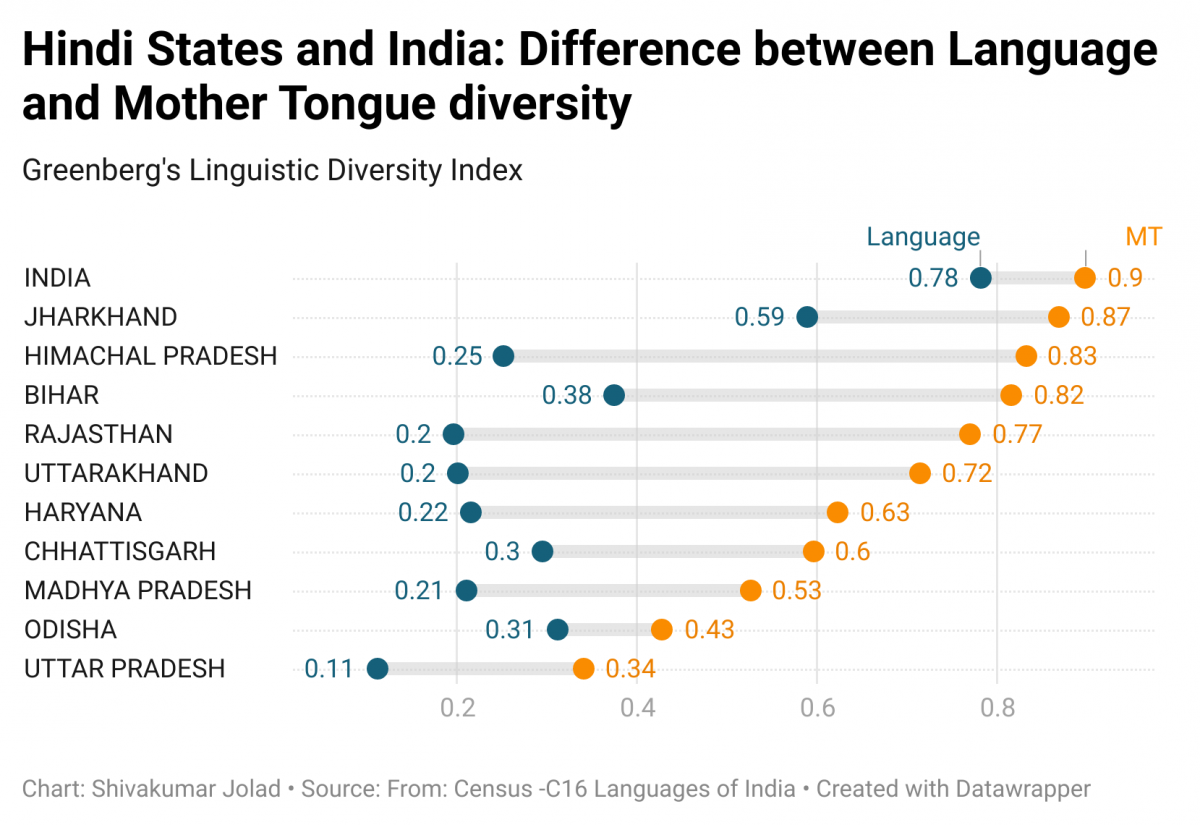 Linguistic fragmentation refers to the diversity of languages within a nation-state, often leading to disparities in political representation, educational access, and cultural expression. India and Pakistan exemplify extreme fragmentation, while Japan’s relative linguistic homogeneity (with 12 million speakers of Japanese as the dominant language) contrasts sharply. Below is a comparative table synthesizing data from Ethnologue (2023), UNESCO, and national census reports to highlight the scale of linguistic diversity:
| Language Group | Number of Speakers (Approx.) | Government Recognition Status | Regional Concentration |
|---|---|---|---|
| India | Total languages: 1,600+ (22 scheduled) | ||
| Hindi | 528 million (native + second language) | Official language (alongside English) | Northern and central states (Uttar Pradesh, Bihar, Madhya Pradesh) |
| Bengali | 100 million | Official in West Bengal, Tripura; second official in Assam | Eastern India (West Bengal, Bangladesh border regions) |
| Telugu | 95 million | Official in Andhra Pradesh, Telangana | South India (Andhra, Telangana) |
| Marathi | 90 million | Official in Maharashtra, Goa | Western India (Maharashtra, Madhya Pradesh) |
| Tamil | 83 million | Official in Tamil Nadu, Puducherry | Southern India (Tamil Nadu, Sri Lanka diaspora) |
| Pakistan | Total languages: 70+ (1 national, 5 regional) | ||
| Urdu | 75 million (native); 150 million (second language) | National language (Constitution, 1973) | Urban centers (Karachi, Lahore), Punjab, Sindh |
| Punjabi | 120 million (including India) | Regional language (official in Punjab) | Punjab (Pakistan/India), Khyber Pakhtunkhwa |
| Sindhi | 30 million | Regional language (official in Sindh) | Sindh province |
| Pashto | 35 million | Regional language (official in Khyber Pakhtunkhwa) | Northwest (Pashtun belt) |
| Balochi | 8 million | Regional language (limited official status) | Balochistan |
| Japan | Total languages: 1 (Japanese) + 16 indigenous minority languages | ||
| Japanese | 125 million | Official and sole national language | Nationwide (with regional dialects like Kansai, Tohoku) |
| Ainu | 25 speakers (endangered) | Recognized as indigenous (2008) | Hokkaido |
| Ryukyuan | 1.3 million (Okinawan dialects) | Regional recognition (not national) | Okinawa prefecture |
Key Observations:
Colonialism and Geopolitics: How British Rule and Partition Shaped Linguistic Divisions
The British colonial legacy artificially consolidated and fragmented languages in South Asia, using language as a tool of divide-and-rule. Policies like the 1835 Macaulay Minutes promoted English education among elites while suppressing regional languages. The 1904 Vernacular Press Act censored non-English publications, further marginalizing indigenous tongues. Post-independence, the 1947 partition exacerbated linguistic tensions by drawing borders through linguistic fault lines, such as:
Key Policies and Backlash:
Japan’s Linguistic Homogeneity: Myth or Reality?
 Japan’s reputation as a linguistically homogeneous society often overshadows the complex realities of its unofficial linguistic diversity. While the government enforces a strict monolingual policy, regional languages, indigenous tongues, and dialects persist beneath the surface, reflecting a tension between national standardization and cultural pluralism. The Language Act of 2003 solidified Japanese as the sole official language, marginalizing minority languages such as Ryukyuan (Okinawan), Ainu, and endangered dialects. This policy, coupled with systemic educational and media biases, has created a linguistic hierarchy where peripheral languages are often stigmatized or erased. Meanwhile, Japan’s education system prioritizes a Japanese-first approach, contrasting sharply with India’s multilingual framework. Social stigma against non-standard dialects further reinforces Tokyo’s linguistic dominance, while media and pop culture homogenize regional accents, perpetuating a myth of uniformity. Power dynamics between Tokyo and peripheral regions—such as Okinawa, Hokkaido, and rural prefectures—exemplify how economic and political factors suppress linguistic diversity, despite its cultural and historical significance.
Japan’s Official Monolingual Policy vs. Unofficial Linguistic Diversity
Japan’s constitutional and legal framework treats Japanese as the de facto official language, with no formal recognition of regional or indigenous languages despite their historical presence. The Language Act of 2003 (外国語に関する法律) explicitly promotes Japanese as the primary language of education, administration, and media, reinforcing its dominance in public spheres. This policy was designed to foster national unity post-World War II but inadvertently marginalized minority languages, including:
Government efforts to preserve these languages remain symbolic and underfunded. While the Ainu Cultural Promotion Act (2008) and Ryukyuan Language Revitalization Projects exist, they lack enforcement mechanisms. For instance, Ainu language classes in Hokkaido schools are optional and poorly attended, with less than 5% participation rates among students. Critics argue that these measures are too little, too late, as decades of neglect have eroded intergenerational transmission.
Breakdown of Endangered Languages and Government Responses
Japan’s indigenous and regional languages face systemic neglect, despite their cultural value. A 2021 report by the National Museum of Nature and Science highlighted three critical categories of endangered languages:
"Japan’s linguistic diversity is not a relic of the past but a living heritage under threat. Without urgent policy shifts, languages like Ainu and Ryukyuan will vanish within decades, depriving future generations of their cultural identity." — Dr. Haruko Cook, Professor of Linguistics, Sophia University
| Language Group | Number of Speakers (2023 est.) | Government Recognition | Revitalization Efforts | Major Challenges |
|---|---|---|---|---|
| Ryukyuan (Okinawan) | ~1.3M (declining rapidly) | None (de facto tolerated) | Bilingual education pilots (limited funding) | Media bias, urban migration, economic pressure |
| Ainu | <100 (mostly elderly) | Limited (cultural acts) | Language nests in Hokkaido (voluntary) | Stigma, lack of institutional support |
| Tsugaru Dialect | ~50,000 (mostly elderly) | None | Oral history archives (no teaching) | Perceived as "backward" by national media |
| Kansai-ben | ~20M speakers (informal use) | None | No official recognition | Social stigma, media exclusion |
Education Systems: Japan’s Monolingual Model vs. India’s Multilingual Framework
Japan’s education system enforces a Japanese-first policy, where regional languages are treated as extracurricular or irrelevant. This contrasts sharply with India’s three-language formula, which mandates:Social Stigma and the Marginalization of Non-Standard Japanese Dialects
Non-standard Japanese dialects—such as Kansai-ben (Osaka/Kyoto), Hokkaido-ben, and Okinawan—face systemic discrimination in media, employment, and education. A 2019 survey by the Japan Times revealed that:The Role of Media and Pop Culture in Homogenizing Japanese Language
Media and pop culture act as powerful homogenizing forces, standardizing language around Tokyo-centric norms. The standard Tokyo accent (Kantō-ben) dominates:Government Communication Breakdowns: Case Studies from India, Pakistan, and Japan
Government communication failures stemming from linguistic diversity often exacerbate crises, deepen societal divides, and erode public trust. In nations like India and Pakistan, where over 1,600 languages are spoken, bureaucratic inefficiencies and policy misalignments frequently arise due to the dominance of official languages (Hindi/Urdu) over regional dialects. Conversely, Japan’s perceived linguistic homogeneity masks critical communication gaps, particularly among marginalized groups like the Ainu, indigenous Ryukyuans, and foreign laborers. This section examines real-world failures in governance—from pandemic misinformation to disaster relief breakdowns—while dissecting bureaucratic hurdles, public health setbacks, and overlooked vulnerabilities in Japan’s communication infrastructure. The interplay between policy design and linguistic reality reveals stark disparities in crisis management. While India and Pakistan grapple with structural inefficiencies in translating critical documents, Japan’s homogeneity myth obscures systemic neglect of non-standard dialects and foreign worker support. A comparative analysis of these cases underscores how language barriers distort emergency responses, undermine health initiatives, and perpetuate inequalities in service delivery.Timeline of Major Communication Failures Due to Language Barriers
Government messaging often falters when official languages fail to resonate with regional or minority populations. Below are key instances where linguistic mismatches amplified confusion, mistrust, and inefficacy during national crises. India: COVID-19 Lockdown Misinformation in Non-Hindi States The abrupt lockdown in March 2020 caught millions unprepared, particularly in states like Tamil Nadu and Kerala, where Hindi is not widely understood. Central government announcements, dominated by Hindi and English, led to:Bureaucratic Hurdles in Translating Official Documents
The legal and administrative machinery in India and Pakistan is heavily skewed toward Hindi and Urdu, creating delays, loopholes, and systemic exclusion for regional language speakers. Japan, despite its homogeneity, faces unofficial barriers in regional dialects and foreign worker support. India: Legal Loopholes and Courtroom Language WarsPublic Health Campaigns Undermined by Linguistic Diversity
Health initiatives in India and Pakistan frequently fail to reach marginalized groups due to language-centric policy design. Japan’s homogeneity myth obscures vulnerabilities in elderly care and migrant health, where dialectal and linguistic gaps persist. India: Ayushman Bharat’s Tribal Language GapSide-by-Side Comparison: National Emergencies Through a Linguistic Lens
Below is a four-column table comparing how India, Pakistan, and JapanThe clash between linguistic diversity and effective governance is not merely an administrative hurdle but a defining challenge of the 21st century, reshaping how nations educate, legislate, and respond to crises. India and Pakistan stand as stark case studies where colonial borders and ethnic fault lines have weaponized language, turning policy decisions into flashpoints of resistance. Japan’s myth of homogeneity, meanwhile, exposes a darker truth: even in countries where a single language dominates, exclusionary practices leave vulnerable communities behind. The lesson is clear—governments that ignore linguistic pluralism risk not just miscommunication but the erosion of social cohesion itself. As digital platforms amplify regional voices and public health emergencies lay bare translation gaps, the question is no longer which countries struggle with language diversity, but how long they can afford to treat it as an afterthought.
Leave a Comment
Comments are moderated before appearing. The data you submit is processed according to the Privacy Policy of Cloudpbx.